
What you will study
Lesson 1
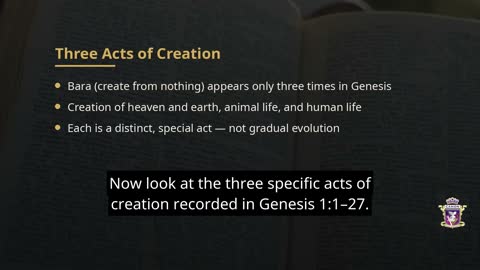
This opening lesson introduces the doctrine of the Holy Spirit and surveys His diversified work, correcting the notion that He first appeared at Pentecost. You will trace the Spirit's agency in creation alongside the Father and Son, examine the Trinity and the Hebrew terms Elohim and bara, and study how He convicts the world of the one sin of unbelief (John 16:8) and conceived and anointed Christ.
Lesson 2
Continuing the Spirit's relation to Christ, this lesson shows Him raising Jesus from the dead (Romans 8:11) and empowering Christ's commands to the church. The focus then turns to the believer: regeneration by the Spirit (John 3:5), witness to our sonship, baptism into the body of Christ (1 Corinthians 12:13), the sealing of Ephesians 1:13, the three stages of sanctification, and transformation into Christ's image (2 Corinthians 3:18).
Lesson 3
Here the Holy Spirit is studied as the Comforter, a title unique to John's Gospel. The lesson unpacks the Greek Paracletos as advocate, helper, and exhorter, and Jesus' promise of 'another comforter' who abides forever (John 14:16-18). Four Johannine passages frame His fourfold ministry as our teacher, our reminder of Christ's words, the revealer of Jesus, and the reprover of the world.
Lesson 4
This lesson examines the fruit of the Spirit from Galatians 5:22-23, contrasting it with the works of the flesh and with mere human character-building or 'wax fruit.' You will study the secret of fruit-bearing through abiding in the vine and divine pruning (John 15), the distinction between fruit and gifts, and how the nine graces are all facets of the one fruit, love.
Lesson 5
Beginning the study of the baptism with the Holy Spirit, this lesson establishes its scriptural name and distinguishes it from the new birth, sanctification, and holiness. Drawing on the apostles, the Samaritans (Acts 8), Paul, and the Ephesian disciples (Acts 19), it argues the experience is subsequent to salvation, given to empower witness (Acts 1:8), and available to every believer of every age.
Lesson 6
This lesson explains how to receive the baptism with the Holy Spirit through faith and complete yieldedness to Christ the baptizer, while cautioning that God surrenders no one's personality. It rejects prolonged 'tarrying' in favor of expectant prayer, surveys the varied ways the Spirit fell in Acts, and presents speaking in other tongues as the initial evidence alongside praise, joy, and boldness.
Lesson 7
This lesson catalogs offenses against the Holy Spirit, treating the unbeliever's sins of resisting (Acts 7:51), insulting or doing despite (Hebrews 10:29), and the unpardonable sin of blaspheming the Spirit by attributing His works to the devil (Matthew 12:31). It then opens the gifts of the Spirit with the gift of prophecy for edification, arguing the foundational offices of apostle and prophet have ceased.
Lesson 8
Concluding the course, this lesson works through the remaining gifts: discerning of spirits, the kinds and uses of tongues, and interpretation, along with helps, governments, and the ministry gifts of Ephesians 4:11. It also names gifts like hospitality, intercession, witnessing, and craftsmanship (Bezalel), closing with the high priest's bells and pomegranates to show gifts and fruit must operate together in love.